Tuesday, May 18, 2010


Saturday, February 20, 2010
Carbon Coolness....


Here are some pictures of carbon fiber. You’re probably thinking that of all the things I could write about I chose carbon. But this is really cool. Look closer at the pictures. One has a 90 degree weave and the other is 60 degrees. The latter is a relatively new product and York used it for the first time on my new winglets (sorry, no pictures just yet).
A little dig here….Hey Bruno….remember I was first.
Think about it, if you use a 90 degree weave you would have to lay alternate layers at various angles to achieve the same results as the 60 degree weave. Plus, it is much easier to wrap around compound curves. See, I told you it was cool.
A little dig here….Hey Bruno….remember I was first.
Think about it, if you use a 90 degree weave you would have to lay alternate layers at various angles to achieve the same results as the 60 degree weave. Plus, it is much easier to wrap around compound curves. See, I told you it was cool.
Tuesday, February 2, 2010
We Could Go There....If We Really Wanted To
 The 60’s were bad; civil unrest, Viet Nam, the height of the Cold War, and the list goes on. But through it all we caught hold of a vision that was greater than ourselves. Nothing since then has matched the drive and determination that Americans showed by reaching the moon, not once, but many times.
Now that Obama has canceled the Ares program we may never see this kind of picture again. We have lost our vision. We have no national goal or objective. We are a nation without a cause.
Tuesday, January 19, 2010


Sunday, January 17, 2010
One of the best moments of summer
Winter is a great time to remember summer. As I was looking over my log book for the past soaring season I thought about a few flights that really stood out. The best two flights were cross country, one in the Grob with York Zentner at the Logan contest and the other was with Lynn Alley in his Duo Discus (scroll down and read "Flying the Duo Discus"). I realized that I never wrote about this extraordinary day.
Lynn called me the night before and asked if I wanted to fly with him. Note: When Lynn calls just clear your schedule. You don't want to miss an opportunity to fly with him. Later I found out that he called York first, but York said "Take Warren". The next day came all too slowly.
As we prepared the Duo Discus I felt an excitement that I really can't quantify. In soaring every flight is different and you never know precisely what the conditions will allow. Lynn outlined what he wanted to do for the day. He would attempt (again) a speed record from Morgan to Kings Peak to Heber and back to Morgan, a task he has tried many times.
The excitement builds as we towed the plane down to the north end of the runway. I'm like a little kid, giggling inside, but I try to restrain my outward appearance. As I get in the plane I reacquaint myself with the very cozy front seat. I hear the drone of the tow plane as it makes our way toward us. Lynn connects the tow rope, climbs in and says, "You have the controls". Once again I get to handle this lovely plane.
Lynn called me the night before and asked if I wanted to fly with him. Note: When Lynn calls just clear your schedule. You don't want to miss an opportunity to fly with him. Later I found out that he called York first, but York said "Take Warren". The next day came all too slowly.
As we prepared the Duo Discus I felt an excitement that I really can't quantify. In soaring every flight is different and you never know precisely what the conditions will allow. Lynn outlined what he wanted to do for the day. He would attempt (again) a speed record from Morgan to Kings Peak to Heber and back to Morgan, a task he has tried many times.
The excitement builds as we towed the plane down to the north end of the runway. I'm like a little kid, giggling inside, but I try to restrain my outward appearance. As I get in the plane I reacquaint myself with the very cozy front seat. I hear the drone of the tow plane as it makes our way toward us. Lynn connects the tow rope, climbs in and says, "You have the controls". Once again I get to handle this lovely plane.
As we roll down the runway it all seems so effortless. Those 20 meter wings take so little to fly. I hear Lynn calmly giving me instructions and in no time we are off the ground. As with other flights, once I get past 200 feet I usually take a big breath (or let out the one I've been holding for the last few minutes) and relax as I follow the tow plane.
We were cruising along not really feeling much lift when all of the sudden my thoughts were shaken back to reality by a "POP", then the tow rope disappears from view. This was an eye-opener for me as I like being in a thermal when I release, but Lynn has the confidence and knows the area well enough that he knows where to be for the lift. Sure enough, moments later we are climbing in gentle lift.
Lynn makes a calculated decision to leave the lift, dash back over to the airport which is the start point on the computer, and then dash back to where the lift was to gain more altitude so we can get going on the first leg. I was a little leery because we were about 7 or 8 miles from the airport, but everything worked out great.
Back in the lift we shot up to 12,000 feet and then headed towards Evanston, Wyoming, all the time checking the flight computer to ensure we had enough altitude to get back to Morgan.
We were cruising along not really feeling much lift when all of the sudden my thoughts were shaken back to reality by a "POP", then the tow rope disappears from view. This was an eye-opener for me as I like being in a thermal when I release, but Lynn has the confidence and knows the area well enough that he knows where to be for the lift. Sure enough, moments later we are climbing in gentle lift.
Lynn makes a calculated decision to leave the lift, dash back over to the airport which is the start point on the computer, and then dash back to where the lift was to gain more altitude so we can get going on the first leg. I was a little leery because we were about 7 or 8 miles from the airport, but everything worked out great.
Back in the lift we shot up to 12,000 feet and then headed towards Evanston, Wyoming, all the time checking the flight computer to ensure we had enough altitude to get back to Morgan.
The views were extraordinary. The cumulus were building over the Uintah mountains and it looked to be a spectacular day. Once past Evanston our eyes were fixed in the direction of Kings Peak, but some of the cumulus clouds were overdeveloping. Lynn, being cautious and wanting to keep all options open decided not to pursue Kings Peak, rather, we would turn southwest and head towards Heber and Strawberry reservoir.
It was interesting to note the location of the lift under the clouds. The wind was from the southwest and the strongest portion of the lift was not directly under the cloud as one would assume, but was on the southwest edge of the cumulus. Several thermals proved this and I made a mental note.
Finally, we were over Daniel's Summit near Strawberry reservoir and approaching 18,000 feet. Up to that point I had flown possibly a third of the flight. Lynn said, "Okay Warren, take us home." There was smoke from wildfires in California that obstructed my view of our home airport. The flight computer indicated about 70 miles. Had we really gotten that far away? I put my trust in the instruments and flew a straight line.
Now it was a time to relax. The computer said we had 5,000 more feet than we needed. So for the next 35-40 minutes was spent looking out the canopy and enjoying the view.
When we were over the Morgan airport we had so much altitude that we decided to keep flying north. We were adjacent to James Peak by Powder Mountain when Lynn made a call for a 180 degree turn and we headed home. Still, we were really high, at least 2,000 feet over glide slope. It's nice to have that kind of altitude in the bank. Then Lynn decided to make a withdrawal. "Let's do some Chandelle's and wing overs!" After a few heart-stopping, stomach-bending maneuvers he said, "You have the controls." The pattern and landing went great.
It was interesting to note the location of the lift under the clouds. The wind was from the southwest and the strongest portion of the lift was not directly under the cloud as one would assume, but was on the southwest edge of the cumulus. Several thermals proved this and I made a mental note.
Finally, we were over Daniel's Summit near Strawberry reservoir and approaching 18,000 feet. Up to that point I had flown possibly a third of the flight. Lynn said, "Okay Warren, take us home." There was smoke from wildfires in California that obstructed my view of our home airport. The flight computer indicated about 70 miles. Had we really gotten that far away? I put my trust in the instruments and flew a straight line.
Now it was a time to relax. The computer said we had 5,000 more feet than we needed. So for the next 35-40 minutes was spent looking out the canopy and enjoying the view.
When we were over the Morgan airport we had so much altitude that we decided to keep flying north. We were adjacent to James Peak by Powder Mountain when Lynn made a call for a 180 degree turn and we headed home. Still, we were really high, at least 2,000 feet over glide slope. It's nice to have that kind of altitude in the bank. Then Lynn decided to make a withdrawal. "Let's do some Chandelle's and wing overs!" After a few heart-stopping, stomach-bending maneuvers he said, "You have the controls." The pattern and landing went great.
Once on the ground I asked Lynn how long we had flown. Thinking it was about 2 1/2 hours I was stunned when he said, 4 hours 14 minutes. Time really does fly!!!!
There is huge difference between flying and soaring. For most people flying is about getting to a destination by the use of thrust or horsepower. Soaring is about HOW you get to a destination and the satisfaction of achieving your goal by the use of your incredible flying machine and your wits.
There is huge difference between flying and soaring. For most people flying is about getting to a destination by the use of thrust or horsepower. Soaring is about HOW you get to a destination and the satisfaction of achieving your goal by the use of your incredible flying machine and your wits.
Sunday, December 27, 2009
Winglets for the Epic
Stay tuned... the Epic flies with its new winglets on December 28, 2009. A report will follow.
Monday, December 7, 2009
Soaring in the Alps....
You just gotta see this cool video.... http://www.youtube.com/watch?v=eO6GJLDqnYY
Sunday, December 6, 2009
New pictures added....

If you look at the slideshow on the right you'll see the Pik-20 getting a new paint job just before I sent it to a new home in Kansas.
Catchup (not ketchup) Time


 I can tell there's not a lot of activity on my blog because no one is reminding me to keep it updated. I have been pretty slow, but finally decided to at least write a few things and post some pictures.
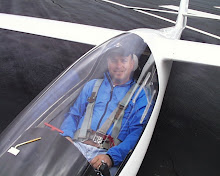
The above picture was taken in August (I told you I was slow) just after York Zentner and I finished a 4 plus hour flight at the contest in Logan, Utah. It was my first cross country flight and it was a lot of fun. We didn't set any records but we made it to 16,000 feet and finished the course.
Thursday, May 14, 2009
Wow! What a video!!!!!
Bruno does it again. Check out http://phoebus.vassel.com/ and click on the video "Ridge Run North of Logan, Utah". Stunning!
Saturday, May 2, 2009
"G" does not stand for glider...

This is a replica of the wings worn by glider pilots of World War II. One pilot of that era remarked, "The G doesn't stand for glider, it stands for guts." Considering the plywood contraptions they flew, and the conditions which they flew in, I would say that he is most certainly correct!
People say the darndest things:
I have been asked many times by the curious and unknowing, "How can you land a plane without an engine?" For the life of me, I can't understand how to land a plane with one.
I have also been asked "Why don't you wear a parachute?" It's not required I replied. But what if you crash? Then I guess I don't need it, do I?
One day I hope to fly powered planes. During my training it would be my supreme joy to cut short my pattern, kill the engine, and perform an unpowered slip to landing, all just to see if my instructor raises an eyebrow.
Monday, April 20, 2009
Tail Mount Camera...
Check out my friend flying his glider with a camera mounted on the tail. http://phoebus.vassel.com/
Tuesday, March 31, 2009
Greenbird...Part aeroplane, part sailboat, part Formula One car


March 29, 2009 With a wind speed of just 30mph (48kmh), British engineer Richard Jenkins has set a new land speed record for a wind-powered vehicle at blistering 126.1mph. Driving the Ecotricity sponsored all carbon fiber land yacht Greenbird across the Ivanpah dry lake bed on the Nevada / California border Jenkins eclipsed the previous benchmark set a decade ago by American Bob Schumacher by almost 10 mph. It also continued a the rivalry between Britain and the United States for setting speed records that dates to the 1920s, when Sir Malcolm Campbell set several records on land and sea.
The Greenbird team were on stand-by in September 2008 at Lake Lefroy in Western Australia but were unable to run due to unseasonal rain. Jenkins has been chasing his dream of setting the record for 10 years and Greenbird is the fifth version of of the land yacht Jenkins originally called Windjet but renamed in a nod to Bluebird, the record-setting racers Britain's Donal Campbell drove in the 1950s and '60s.
The Greenbird is a 600 kg carbon fiber composite vehicle that uses wind (and nothing else) for power. The only steel in the vehicle is the wheel bearings and bearings used to make the vehicle steerable. The land yacht is a very high performance sailboat that uses a solid wing, rather than a sail, to generate movement. The aerodynamic design and light weight allows the vehicle to achieve speeds three to five times faster than the wind speed thanks to a phenomenon known as ‘apparent wind’.
For an example of apparent wind, imagine you are riding your bicycle on a completely calm day with no wind. You can feel wind on your face and it feels stronger as you pedal faster. That is because as you move forward, the motion creates its own wind. Now imagine you are riding your bicycle but there is a strong breeze coming at you from the right. This natural wind is called "true wind". When you add this side wind to the cycle ride, the wind the rider feels is now somewhere between the true wind (from the side) and the man made wind (from ahead). This resultant wind is know as the ‘apparent wind’ and will have a speed and apparent wind angle, measured from the direction of travel to the apparent wind angle.
Iron Duck, the previous record holder driven by American Bob Schumacher was a similar design and the record was set at the same location. The primary difference between the two is that where Greenbird is all carbon fiber the Iron Duck was steel framed with foam and fibreglass fairings.
Richard Jenkins also has an ice version of the Greenbird so the next challenge is to settle the debate about whether traveling on ice or land will be faster.
Paul Evans
The Greenbird team were on stand-by in September 2008 at Lake Lefroy in Western Australia but were unable to run due to unseasonal rain. Jenkins has been chasing his dream of setting the record for 10 years and Greenbird is the fifth version of of the land yacht Jenkins originally called Windjet but renamed in a nod to Bluebird, the record-setting racers Britain's Donal Campbell drove in the 1950s and '60s.
The Greenbird is a 600 kg carbon fiber composite vehicle that uses wind (and nothing else) for power. The only steel in the vehicle is the wheel bearings and bearings used to make the vehicle steerable. The land yacht is a very high performance sailboat that uses a solid wing, rather than a sail, to generate movement. The aerodynamic design and light weight allows the vehicle to achieve speeds three to five times faster than the wind speed thanks to a phenomenon known as ‘apparent wind’.
For an example of apparent wind, imagine you are riding your bicycle on a completely calm day with no wind. You can feel wind on your face and it feels stronger as you pedal faster. That is because as you move forward, the motion creates its own wind. Now imagine you are riding your bicycle but there is a strong breeze coming at you from the right. This natural wind is called "true wind". When you add this side wind to the cycle ride, the wind the rider feels is now somewhere between the true wind (from the side) and the man made wind (from ahead). This resultant wind is know as the ‘apparent wind’ and will have a speed and apparent wind angle, measured from the direction of travel to the apparent wind angle.
Iron Duck, the previous record holder driven by American Bob Schumacher was a similar design and the record was set at the same location. The primary difference between the two is that where Greenbird is all carbon fiber the Iron Duck was steel framed with foam and fibreglass fairings.
Richard Jenkins also has an ice version of the Greenbird so the next challenge is to settle the debate about whether traveling on ice or land will be faster.
Paul Evans
Sunday, March 29, 2009
Lenticular...

Monday, February 23, 2009
Tuesday, February 17, 2009
Lake Effect Snow
 Once in a while, when conditions are just right, we get a good storm that really dumps on us. Today was one of those days, 14 inches of wet snow. We've had a few good storms lately and in the past week we got 32 inches. Global warming? I think not. (click on picture to see a larger version)
 Saturday, January 3, 2009
Flying in the dead of winter...
I got to experience a soaring simulator called Condor. My friend, Bruno, has been talking up this program for a year or so. Now I know why. Not only is it quite a bit like flying my own plane, I was able to fly along with other pilots...online. Very cool.
Thursday, January 1, 2009
It's been a long time...

...since I've shot a large caliber hunting rifle. Okay, I know there are bigger calibers but a .30-06 is big for me. 12 shots and 12 holes, all from 100 yards. It's a start. On the drive home I was wondering when I've shot last. About four years ago I shot about 30 rounds of .22. Fourteen years ago I borrowed a .243 from a friend; one shot and I brought a deer home. Twenty-seven years ago I bought a Remington .308 and only shot it a few times. So you see, I have very little experience. Must shoot more.
1 Jan 2009
The New Year has finally arrived. And what do have to look forward to? " Obama-tics". On a brighter note there is quiche in the oven and black eyed peas in the crock pot. I think I'll go sight in my rifle. It's going to be a good day.
Tuesday, November 4, 2008
A Disappointed American
America...you have just made the biggest mistake. You have just voted for socialism by buying in to the "redistribution of wealth". You have voted for higher taxes, larger welfare rolls, bigger government, regulated business. Things will not get better. They will get worse.
Thursday, October 16, 2008
Citius, Altius, Fortius...Swifter, Higher, Stronger
The Olympic motto takes on new meaning when I think of flying a sailplane. Since this oydessy began more than two years ago I have learned to fly faster, higher and with more courage than ever. In my case the last word of the motto should be Virtus, or man of courage.
Citius
When I first started flying gliders I was amazed at how dynamic the air is. Sometimes the thermals are like a gentle push, other times they are like a kick in the seat of the pants. Wherever there is lift there will be a proportionate amount of sinking air nearby. Where there is really good lift you can bet there is exceptional sink. The solution? Fly slower in the lift and faster through the sink. I’m used to flying between 40-60 knots (46-69 mph) and the wind going past my canopy makes a gentle whisper. Flying through sinking air I’ll speed up to say 80 knots (92 mph). The wind sounds like it’s roaring. I wonder what the sound is like at the 142 knot (163 mph) redline of my plane.
Altius
I love being high above the ground in my plane. (It’s ironic that I don’t like getting up on the roof of my house.) The world looks different the higher you go. Everything looks friendlier. After a flight the euphoria slowly wears off and I see that the only that has changed is me. The world is still the same.
Virtus
I’ve heard that it takes a certain amount of courage to fly away from your home airport for the first time. I am just starting to test the limits of my courage by flying further away from the airport. On one flight I was talking with another pilot who had flown his sailplane from Idaho Falls and was circling over Logan and was getting ready to head back. He said the air was great and I should consider flying north to where he was. I told him I was a relatively new pilot and I still had chicken feathers growing out my rear end. He said, “It’s time to pluck those feathers.” Indeed it is.
Wednesday, October 15, 2008
Try my new slideshow...
I know you can see these pictures further down in my blog. This is my first experiment with creating a slideshow. If you want to see a larger version just click on the picture. Enjoy!
Friday, September 19, 2008
First Inflight Pictures

This is taken from the back side of the Durst Peak looking at the East side of the Wasatch Front. Where the heavy clouds are is the Bountiful area. Those are the clouds that would eventually end my flight.
 Again, the back side of the Wasatch. You can clearly see Weber Canyon.
This shot is looking away from the Wasatch toward the Uintah mountains in a southeast direction.
Flight Facts:
1 hour 14 minutes...the weather was deteriorating and I had to cut it short.
Highest altitude...13,126 feet.
Best thermal...870 feet per minute.
First time to take pictures while flying (not easy).
First time to share a thermal with another plane (Thanks Ron!).
A VERY sweet landing and rollout.
Sunday, September 14, 2008
Flying the Duo Discus


I’ve been hanging around glider pilots and the Morgan County airport for about three years now. Several pilots have told me that I need to get a ride in Lynn Alley’s Duo Discus. Not wanting to show my over-eager side I never asked for a ride.
I’ve bumped into Lynn several times and I’ve found he has a wonderfully dry sense of humor. The other day he was telling everyone about his cracked ribs, but he tells it in such a way that really grabs your attention, “So there I was water skiing in the dark…” After his brief story he looks at me and says, “Do you want to go fly in the Duo Discus?” At first I was wondering if he was really talking to me. I hope I didn’t look like…well, stupid as I picked my jaw off the pavement and wiped the drool from my lips. In a shaky voice I said yes.
You may not understand my reaction because a plane is just a plane. Isn’t it? For the uninitiated this is one of the most beautiful sailplanes you’ll ever see. Even pictures really don’t do it any justice. This is a German engineering marvel that you must see up close to appreciate its real beauty.
The top picture is from the manufacturer’s website and shows the latest Duo Discus with a longer cockpit and winglets. The second picture is Lynn’s plane on final approach to Morgan County airport.
So there I was, sitting in the front seat of a Duo Discus and not really believing that I was about to fly this thing when Lynn catches my attention by saying, “You have the controls.” I run through my checklist, give a thumb’s up to the wing runner (Lynn’s daughter, Peggy) and make a radio call to the tow plane. Moments later we are rolling down the runway and it gently eases into the air. After 2.6 hours of joyous flying we landed.
I finally have flown a Duo Discus. FYI...used ones fetch $120,000 - $140,000.
I’ve bumped into Lynn several times and I’ve found he has a wonderfully dry sense of humor. The other day he was telling everyone about his cracked ribs, but he tells it in such a way that really grabs your attention, “So there I was water skiing in the dark…” After his brief story he looks at me and says, “Do you want to go fly in the Duo Discus?” At first I was wondering if he was really talking to me. I hope I didn’t look like…well, stupid as I picked my jaw off the pavement and wiped the drool from my lips. In a shaky voice I said yes.
You may not understand my reaction because a plane is just a plane. Isn’t it? For the uninitiated this is one of the most beautiful sailplanes you’ll ever see. Even pictures really don’t do it any justice. This is a German engineering marvel that you must see up close to appreciate its real beauty.
The top picture is from the manufacturer’s website and shows the latest Duo Discus with a longer cockpit and winglets. The second picture is Lynn’s plane on final approach to Morgan County airport.
So there I was, sitting in the front seat of a Duo Discus and not really believing that I was about to fly this thing when Lynn catches my attention by saying, “You have the controls.” I run through my checklist, give a thumb’s up to the wing runner (Lynn’s daughter, Peggy) and make a radio call to the tow plane. Moments later we are rolling down the runway and it gently eases into the air. After 2.6 hours of joyous flying we landed.
I finally have flown a Duo Discus. FYI...used ones fetch $120,000 - $140,000.
Friday, August 22, 2008
"4 hours, 7 minutes...4 hours, 7 minutes..."
I’m a bit overdue for this blog. I should have written it on Aug 13th. After getting to work I checked the soaring forecast which called for light winds and thermals reaching 18,000 feet. I could feel the effects of my A.D.D. (Altitude Deficit Disorder) setting in.
I called Peggy to let her know that I wanted to go flying. She was too busy at work to drive me home so she told me to take the car and come pick her up when I was done flying. Neither of us could anticipate what was going to happen that day.
I launched about 2:15 and had several good bumps while on tow but decided to go to 3000 AGL before releasing. I was able to maintain altitude but couldn’t gain anything. Two friends in a Duo Discus had launched about 20 minutes after I had. One called on the radio to check up on me. They had found a boomer thermal and were already passing through 10,000 feet. He gave some general directions so I left the relative comfort of Big Mahogany ridge in search of it. After a couple minutes I was a bit disappointed because I wasn’t finding anything. In a last ditch effort I turned east and less than a half mile later I found it. With a sharp right bank I got in the thermal and rode it up to 12,000 feet. Later when I reviewed my flight I discovered that the max vertical speed in that thermal was 1150 feet per minute. Not bad for a plane without an engine.
It was an epic day with a 4 hour 7 minute flight and I reached an altitude of 14,500 feet. I could have gone higher but there was a very turbulent band of lift on the lee side of Durst peak that was hard for me to get through so I was content with the fact that I had made it that far.
Four times I ventured away and out of sight of the airport. Each time I came back to where I knew the ridge lift was working and regain altitude. Throughout the flight there were some mid-level cirrus blowing in from the northwest that was cooling things off. When the variometer only showed that I could only get 100 fpm I decided it was time to head back.
As I flew over Morgan Valley I encountered something I had heard about. As the air cools the earth is still releasing heat. The result was very buoyant air. When I should have been losing about 150 fpm I was only losing about 50 fpm. This allowed me to fly for an extra 15-20 minutes.
By the time I got down, chatted with friends, put the plane back in the trailer and towed it home it was 8:30. I picked up Peggy from work and got a quick bite to eat on the way home. I was exhausted but I could hardly sleep. I woke up many times and my first thought was “4 hours and 7 minutes.”
This was my 129th flight and it was the first time that I felt that I had been admitted into the fraternity of a soaring pilot.
I called Peggy to let her know that I wanted to go flying. She was too busy at work to drive me home so she told me to take the car and come pick her up when I was done flying. Neither of us could anticipate what was going to happen that day.
I launched about 2:15 and had several good bumps while on tow but decided to go to 3000 AGL before releasing. I was able to maintain altitude but couldn’t gain anything. Two friends in a Duo Discus had launched about 20 minutes after I had. One called on the radio to check up on me. They had found a boomer thermal and were already passing through 10,000 feet. He gave some general directions so I left the relative comfort of Big Mahogany ridge in search of it. After a couple minutes I was a bit disappointed because I wasn’t finding anything. In a last ditch effort I turned east and less than a half mile later I found it. With a sharp right bank I got in the thermal and rode it up to 12,000 feet. Later when I reviewed my flight I discovered that the max vertical speed in that thermal was 1150 feet per minute. Not bad for a plane without an engine.
It was an epic day with a 4 hour 7 minute flight and I reached an altitude of 14,500 feet. I could have gone higher but there was a very turbulent band of lift on the lee side of Durst peak that was hard for me to get through so I was content with the fact that I had made it that far.
Four times I ventured away and out of sight of the airport. Each time I came back to where I knew the ridge lift was working and regain altitude. Throughout the flight there were some mid-level cirrus blowing in from the northwest that was cooling things off. When the variometer only showed that I could only get 100 fpm I decided it was time to head back.
As I flew over Morgan Valley I encountered something I had heard about. As the air cools the earth is still releasing heat. The result was very buoyant air. When I should have been losing about 150 fpm I was only losing about 50 fpm. This allowed me to fly for an extra 15-20 minutes.
By the time I got down, chatted with friends, put the plane back in the trailer and towed it home it was 8:30. I picked up Peggy from work and got a quick bite to eat on the way home. I was exhausted but I could hardly sleep. I woke up many times and my first thought was “4 hours and 7 minutes.”
This was my 129th flight and it was the first time that I felt that I had been admitted into the fraternity of a soaring pilot.
Sunday, August 3, 2008
Reaching New Heights
Yesterday I took a high tow to ensure success and I wasn't disappointed. Longest flight and highest altitude to date (1:52 and 12,000). I even chased after a Cumulus cloud about 5 miles east of Durst Mountain. It turned out to be a sucker cloud...suckered me into thinking there might be lift under it...NOT! I still had plenty of altitude to get back to Durst. It was the very first time I was out of sight of the airport. I had to fly through 9-10 knots of sink on the way back. I was doing about 80 knots but probably should have gone faster. I was happy when I found a 3 knot thermal. WHEW! About 1:15 into the flight I realized my gear was still down. I wonder how much better I could have done with it up! I had a little bit of a trouble in rough air thermals. I kept over-banking on the downwind side of the thermal. I was on the lee side of Durst and it was pretty bumpy. Still, there was plenty of lift with most in the 5-7 knot range. In the pattern I was able to get my speed (aircraft+mind speed) under control which really took the pressure off. The pattern was nice and I had an "okay" landing. Hey, one thing at a time. I think the coolest part of the whole flight was when I was on top of Durst in a 5 knot thermal with 10 degrees of flap, at 42 knots. It was so quiet and serene. I pulled out my phone and called my wife. The whole flight was a HUGE confidence booster. As I was packing up my plane I thought, "I really am a pilot!" I can't wait for more! Last night Lynn Alley and I talked about making plans for my first cross country flight which will probably be to Logan. I'm not in a hurry...okay, with the success I had yesterday, YES I AM!!!!
Saturday, July 26, 2008
The Domesticated Man
I can add something to my list of things I can do. Today I made my first batch of Apricot Pineapple jam; 20 pints in just over 2 hours....and it even tastes good! It was so easy that I'm eyeing my Plum tree and thinking about making Plum preserves in September. Move over Emeril...
Monday, July 7, 2008
John Mildon...Everyone's Friend
 My friend, everyone’s friend, John Mildon passed away last night. He is known in local flying circles as the “curmudgeon”, but don’t let that word fool you. John was a gifted pilot, writer, and a skilled craftsman. John had the vision to see how things should be, and his incredible wit always brought a smile.
Since I met John about two and a half years ago I have always known him to be a straight shooter; he always told it like it is. I overheard a conversation he was having with another pilot at the airport. John related how good the conditions were for soaring that day. When asked why he came down John replied, “I had to pee.”
I told John that I was having some difficulties with another pilot who was critical of my flying. Before I could finish he said, “Who the h___ is he?” I tried to continue my story of how I had a long phone conversation with this person. “That was your first mistake”, he said. Trying to regroup I said that I followed up the phone call with a very long e-mail. To which he said, “That was your second mistake.”
As I was getting ready to fly my plane I sat in the cockpit fiddling with the flight computer. My friend, Dan Thirkill was watching as I fumbled through the screens. Then he said, “If John were here he would say to just fly the #$%^ plane.”
John told me how my wife is such a sweetheart. When I would visit him in the hospital he would always ask where Peggy was. I said, “John, I think you like my wife more than you like me.” With a laugh he said, “Of course I like Peggy more than I like you!”
John preferred a personal visit and a handshake rather than a phone call. He didn’t like e-mail but liked letters because you could hold it in your hand. He didn’t like cluttered instrument panels filled with gadgets, just the basic instruments. I think we all could learn something from him.
John, I’m going to miss you.
Sunday, July 6, 2008
Back in the air again

As I write this I’m still trying to wrap my arms around what really happened yesterday. I had lot of “firsts” along with some disappointments, but overall it was the most rewarding flight I’ve ever done on my own.
Takeoff
My best yet. I had the flaps at -10 degrees which gave plenty of aileron authority. I rolled the flaps to zero and the plane hopped off the ground. I had to hold the stick forward a little to keep from going too high but otherwise it was very nice. I even remembered to make the call out at 200 feet.
Tow
Shortly after starting tow, Stan McGrew, the tow pilot, called me on the radio and asked how the speed was. I said it was just fine. Actually, I didn’t look at the airspeed indicator because my eyes were fixed on the tow plane. I didn’t want to risk getting out of position just to look at my speed. I passed through a couple good thermals but decided to take a high tow. At 8500 feet the variometer was showing that I was going up about 1000 feet per minute. I felt this would guarantee 500-600 fpm lift so I pulled the release.
Soaring
It didn’t take long to lose 1000 feet and that’s not what I wanted. I finally realized that I needed to be a little closer to Big Mahogany because the lift was not in front of it but on top. I stayed there and flew figure eights in and out of two areas of lift. I finally got high enough that the lift was starting to get smoother. For the first time I felt I was starting to relax.
Dan launched after me and it was nice to have him close by. After I got up to about 11,500 feet he said to try going on the lee side of Durst Mountain, something I had never done before. The lift was stronger but the air was rough. I didn’t do very well and was losing more than I was gaining. After a few minutes I thought it best to get back on the windward side. I had lost some altitude trying to fly the rough air, and though I could have made it over the top of Durst, I decided to fly around it on the north side. The remainder of the flight was spent on the front side of Durst and Big Mahogany.
Landing
After flying a lap around the airport I made the radio call and flew the pattern. I could feel my heartbeat pounding as I knew there were a lot of eyes on the ground watching me; Peggy, Dan Thirkill, Lynn Alley, and who knows who else. “Don’t screw this up” I said to myself. Without going into a lot of detail I’ll just say that the landing was ugly, but it was less ugly than the previous flight. The good part was I touched down where I wanted.
Disappointments
I could have flown much longer had I made better turns. That will come in time. I’m still trying to figure out this plane.
Firsts
Most time spent in the air – One hour, forty-five minutes
Most time spent ridge soaring – One hour, thirty minutes
Most altitude gained – 3000 feet
Max altitude – 11,500 feet
Lessons learned
Don’t be afraid to use a steeper bank angle in a thermal.
Fly a wider pattern.
Don’t rush the landing.
Most importantly --Don’t think about what others may think of your flying. Once upon a time they were a young pilot too.
Takeoff
My best yet. I had the flaps at -10 degrees which gave plenty of aileron authority. I rolled the flaps to zero and the plane hopped off the ground. I had to hold the stick forward a little to keep from going too high but otherwise it was very nice. I even remembered to make the call out at 200 feet.
Tow
Shortly after starting tow, Stan McGrew, the tow pilot, called me on the radio and asked how the speed was. I said it was just fine. Actually, I didn’t look at the airspeed indicator because my eyes were fixed on the tow plane. I didn’t want to risk getting out of position just to look at my speed. I passed through a couple good thermals but decided to take a high tow. At 8500 feet the variometer was showing that I was going up about 1000 feet per minute. I felt this would guarantee 500-600 fpm lift so I pulled the release.
Soaring
It didn’t take long to lose 1000 feet and that’s not what I wanted. I finally realized that I needed to be a little closer to Big Mahogany because the lift was not in front of it but on top. I stayed there and flew figure eights in and out of two areas of lift. I finally got high enough that the lift was starting to get smoother. For the first time I felt I was starting to relax.
Dan launched after me and it was nice to have him close by. After I got up to about 11,500 feet he said to try going on the lee side of Durst Mountain, something I had never done before. The lift was stronger but the air was rough. I didn’t do very well and was losing more than I was gaining. After a few minutes I thought it best to get back on the windward side. I had lost some altitude trying to fly the rough air, and though I could have made it over the top of Durst, I decided to fly around it on the north side. The remainder of the flight was spent on the front side of Durst and Big Mahogany.
Landing
After flying a lap around the airport I made the radio call and flew the pattern. I could feel my heartbeat pounding as I knew there were a lot of eyes on the ground watching me; Peggy, Dan Thirkill, Lynn Alley, and who knows who else. “Don’t screw this up” I said to myself. Without going into a lot of detail I’ll just say that the landing was ugly, but it was less ugly than the previous flight. The good part was I touched down where I wanted.
Disappointments
I could have flown much longer had I made better turns. That will come in time. I’m still trying to figure out this plane.
Firsts
Most time spent in the air – One hour, forty-five minutes
Most time spent ridge soaring – One hour, thirty minutes
Most altitude gained – 3000 feet
Max altitude – 11,500 feet
Lessons learned
Don’t be afraid to use a steeper bank angle in a thermal.
Fly a wider pattern.
Don’t rush the landing.
Most importantly --Don’t think about what others may think of your flying. Once upon a time they were a young pilot too.
I have been very blessed and I am very grateful to be able to fly. As I was passing through 11,000 feet I called Peggy on the radio and said, “You should see the view from up here!” On the horizon I could clearly see the snow capped Uintah Mountains (and they were beckoning to me). I can hardly wait for the next flight, to have new firsts, to achieve even more than I have on this flight. Truly, soaring is the poetry of flight.
Tuesday, June 3, 2008
Six Word Memoir
Okay...I'm up for Tobi's challenge to create a six word memoir. (See http://www.tobiwilkinson.blogspot.com) To understand you may have to ask Peggy, my parents, or my fourth grade teacher.
"I'm attracted to windows, and dreaming."
Subscribe to:
Posts (Atom)